
How to Tell If Your HOA Will Cite You for Your Roof
What do HOA inspectors actually look at on a roof?
They look from the street, usually walking or driving the community, and they are looking at what a neighbor would notice. That means the front slope and any slope visible from the road. Inspectors are generally not on your roof, and they are not checking your underlayment. They are checking appearance.
The things that get flagged:
- Dark streaks or stripes running down the slope
- Large dark patches, especially on the shaded or north-facing side
- Green or moss-like growth along tile edges and valleys
- Visibly damaged, missing or cracked tile
Your covenants spell out the standard, and some associations are stricter than others.
Why does the black streak happen in the first place?
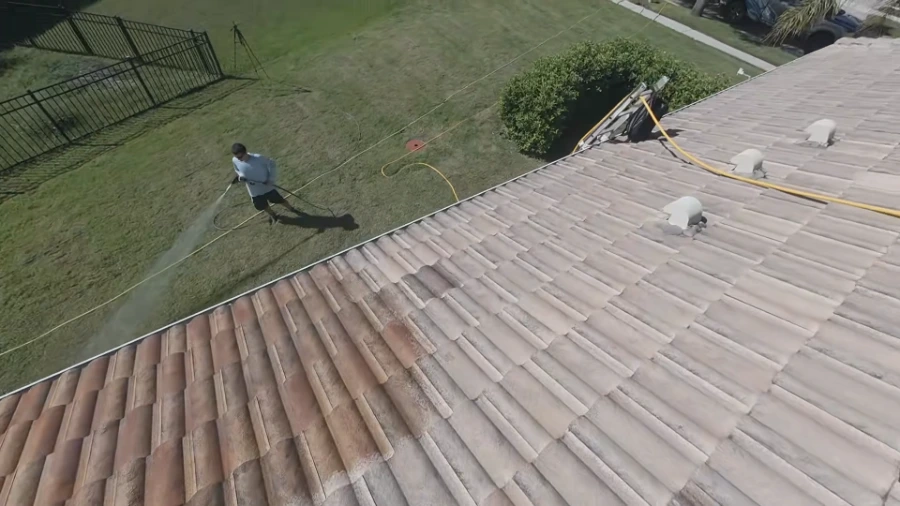
It is not dirt. It is a cyanobacterium called Gloeocapsa magma that spreads on airborne spores and thrives in Port St. Lucie’s humidity of around 74 percent and more than 55 inches of rain a year. It feeds on the calcium carbonate in concrete and clay tile, and it usually starts on shaded slopes, then creeps across. If your neighbor’s roof is streaked, yours is probably next, because the spores travel.
How do I tell algae from dirt or a roof stain?
Three quick checks. It follows the direction water runs, in streaks down the slope. It is darker and more uniform than dust. And it returns after you rinse it, because a rinse does not kill it. If it looks like someone ran a dark paint roller down the tile, it is almost certainly Gloeocapsa magma.
How does a roof violation usually unfold?
Processes vary by association, so read yours. The common pattern:
- Inspection. A reviewer notes the roof during a regular inspection round, often in late winter or fall.
- Courtesy or violation letter. It names the problem and sets a deadline to fix it.
- Cure period. You have a set number of days to clean it. In practice, notices often come within a month or two of the inspection.
- Follow-up. If it is not fixed, associations can escalate to fines or further enforcement, depending on their documents.
That last step is the one to avoid. Your covenants list the exact timeline and fines.
What should I do if I get a roof violation letter?
- Read the deadline and the exact wording. Note which surfaces it cites.
- Do not pressure wash the roof yourself. High pressure cracks tile, strips coating and can void warranties.
- Photograph the roof now. You will want a before.
- Get a soft wash quote. Send us a photo of the letter and the roof. We quote the same day.
- Keep the paperwork. After the cleaning, send your association the before-and-after photos and the dated service receipt.
Why not just rent a pressure washer and do it myself?
Because a roof is the wrong place to learn. Barrel clay tile is porous and brittle, and pressure can crack it or push water up under the overlaps. Working on a wet tile roof with chemicals is also a serious fall risk, and incorrect dilutions can damage landscaping and stain surfaces. A soft wash uses a low-pressure system and a controlled solution, applied from the edges so tiles are not walked on.
How much does it cost to clear a roof violation?
Roof soft washing in Port St. Lucie runs $300 to $550 for a standard single-story home. If your notice also cites the walls or the driveway, our HOA Complete package covers house, driveway and roof for $500 to $750 and includes the dated receipt. A rush add-on of $75 to $100 applies if your deadline is within 5 business days. See the pricing guide.
Can I prevent the next roof violation?
You can slow it down. A soft wash typically keeps a roof clean for 2 to 3 years because it kills the algae instead of rinsing it. Trimming branches that shade the roof helps it dry faster. Cleaning before your inspection window, in January or September for many communities, keeps you ahead of the reviewer. See our roof soft washing page and the HOA compliance hub. Timing varies by association, so check your own HOA notices; our Tradition and Riverland pages cover what each community looks for.
Frequently Asked Questions: HOA Roof Violations in Port St. Lucie
Can my HOA fine me for a dirty roof in Port St. Lucie?
Many associations treat dark roof streaks as an exterior maintenance violation, and enforcement can include fines. Your covenants spell out the process and the amounts.
What are the black streaks on my roof?
Gloeocapsa magma, a living cyanobacterium that spreads on airborne spores in humid weather. It is not dirt, and rinsing alone does not kill it.
How do I clear a roof violation fast?
Get the roof soft washed, take before-and-after photos and send your HOA the dated service receipt. Ask about rush booking if your deadline is close.
Is it safe to soft wash a tile roof?
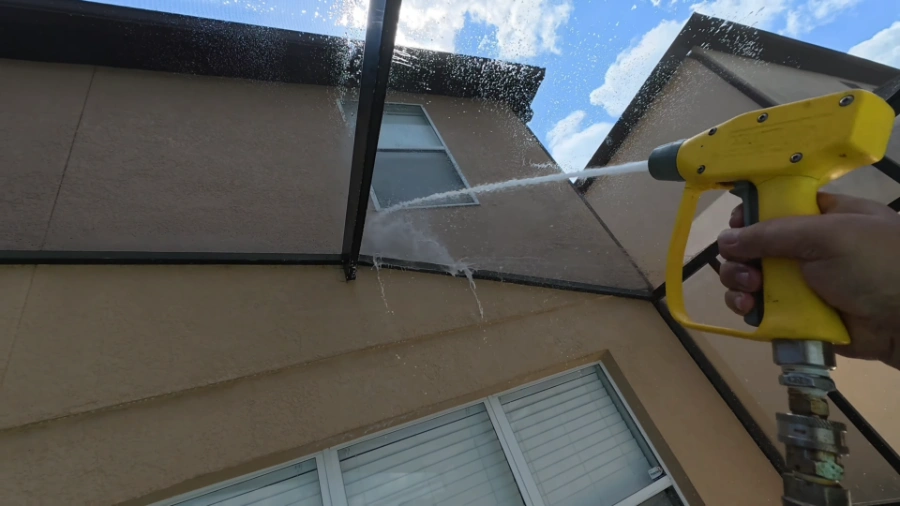
Yes. Soft washing runs under 100 PSI and relies on the cleaning solution, so tile is not cracked or stripped.
How long does a soft-washed roof stay clean?
Typically 2 to 3 years, depending on shade, trees and nearby water.
Got a letter about your roof?
Send us a photo of the notice and the roof. We will quote you the same day, clean it without damaging the tile, and give you a dated receipt for your association. No deposit.